
Healthcare Website Development
// Secure Care
Secure, HIPAA-Compliant, and Engineered to Drive Patient Appointments

Ready to attract more patients and grow your practice?
// Expert Care
Why Healthcare Web Development Requires a Specialist

Trust is Technical:
Page speed delays, downtime, and unsecured forms are invisible until they cost you a booking. We engineer for absolute reliability.
Compliance is Architectural:
HIPAA and GDPR-friendly data flows, detailed consent logs, and secure role-based access must be built into the core framework, not bolted on as an afterthought.
Growth Requires Structure:
We utilize scalable content models (Specialties → Conditions → Doctors → Locations) that build massive topical authority to support your Healthcare SEO strategy
Operations Rely on Integrations:
By seamlessly integrating your booking tools, patient portals, and telemedicine platforms, we reduce repetitive phone calls and minimize patient no-shows.
// Patient Growth
Core Features Built for Patient Acquisition
Find-a-Doctor Directories:
Advanced filtering by specialty, location, and language, tied to robust provider profile pages with structured data and direct booking links.
Multi-Location Hubs:
Dynamic, unique pages for every clinic or hospital location, complete with integrated maps, parking instructions, and localized SEO signals. Learn more about our Local SEO Solutions.
Telemedicine Modules
Easy-to-navigate telehealth hubs featuring eligibility requirements, step-by-step join instructions, and technical troubleshooting guides.
Patient Resource Centers:
Centralized hubs for intake forms, insurance information, billing FAQs, and pre/post-op care guides to dramatically reduce front-desk call volume.

// Medical Conversions
The 4 Pillars of a Conversion-Ready Medical Website
- Optimized Assets:
- Next-gen image formats (WebP/AVIF), lazy loading, and intelligent CDN pre-connections.
- Exceeding Benchmarks:
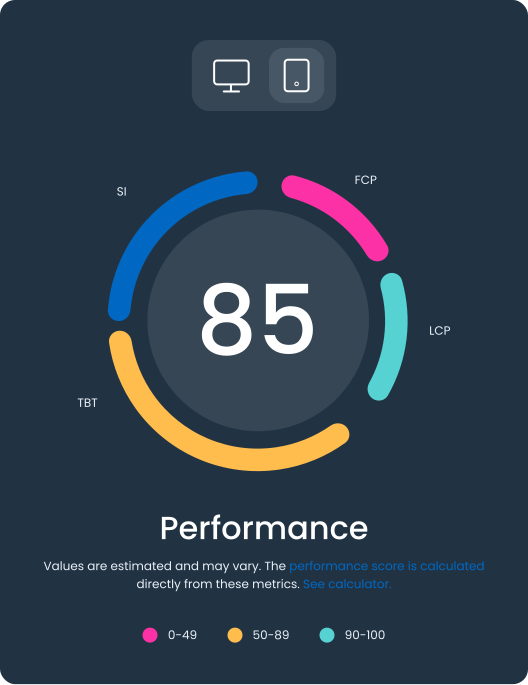
- We target LCP < 2.5s, CLS < 0.1, and INP < 200ms on real mobile devices.
- Encrypted endpoints, advanced bot/spam protection, and explicit consent statements.
- PHI minimization strategies and secure calendar integrations.
- High-contrast color palettes, logical keyboard navigation, and precise focus states.
- Screen-reader-friendly alt text, descriptive link labels, and media transcripts.
- Strategic internal linking silos preventing keyword cannibalization.
- Comprehensive Schema Markup implementation (MedicalClinic, Physician, Service, FAQPage) to dominate search results.
Mobile-First Performance (Core Web Vitals)
Patients search for care on their phones. We build for lightning-fast speeds that keep them engaged and satisfy Google’s ranking algorithms.
Uncompromising Security & Safe Booking
Protecting Protected Health Information (PHI) is our top priority. We create secure, frictionless pathways for patients to request care.
Universal Accessibility (WCAG 2.1 AA)
Healthcare is for everyone. We build inclusive digital experiences by default, ensuring all patients can navigate your site easily.
Search-Ready Architecture
We structure your code so search engines understand exactly what you treat and where you treat it.
// The Tech Stack:
Built to Scale with Your Practice
Modern WordPress:
Familiar, fast, and incredibly powerful. We utilize block-based editors paired with custom components, hardened security protocols, and strict performance optimizations.
Headless / Jamstack (e.g., Next.js):
The gold standard for top-tier speed, omnichannel content distribution, and bank-level security. Ideal for large hospital networks or practices with strict performance mandates.
Hybrid Solutions:
Keep content authoring in an intuitive CMS while shipping critical pages statically, rendering dynamic elements (like booking and search) on the client side.
// Smooth Migration
Seamless Rebuilds & Zero-Downtime Migrations

Deep Crawl & Content Audit:
We map every URL, backlink, and top-converting page on your current site to determine what to keep, improve, or consolidate. Need fresh copy? Check out our Medical Content Writing Services.
Flawless Redirect Mapping:
We implement rigorous 301 redirect maps to preserve search equity, tested thoroughly with automated software.
Staging & QA:
We utilize a secure soft-launch environment where we test accessibility, speed, schema validation, and analytics tracking before going live.
// Core Web Vitals
Meaningful Analytics & Transparent ROI Reporting
// Featured Website
Ratio Aesthetic Dermatology

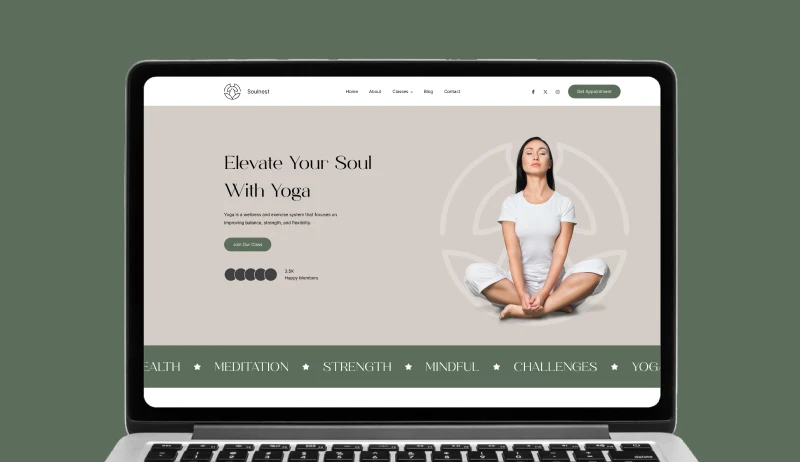
Soulnest Yoga Website
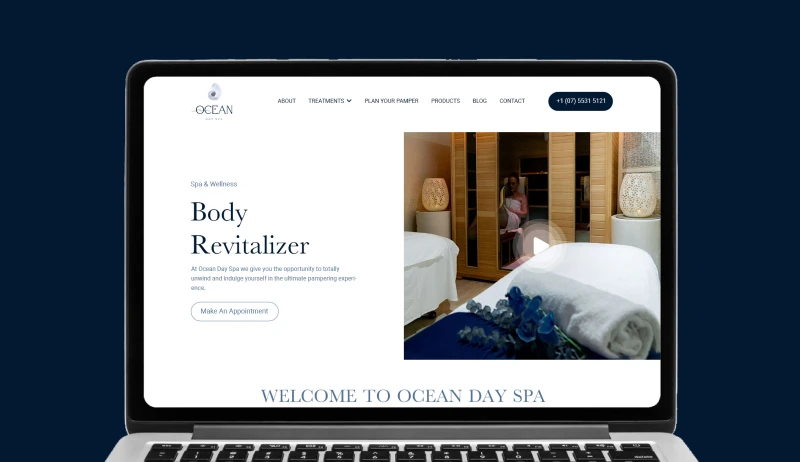
Ocean Day Med Spa

Ratio Branding and Web Design

Pharmalert Website
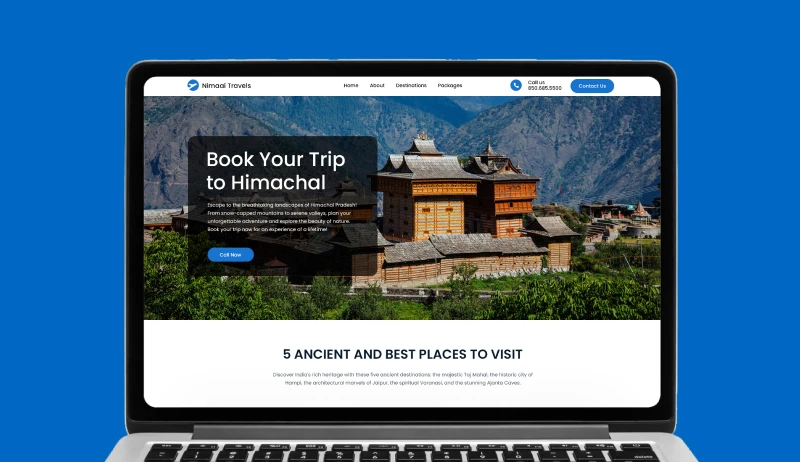
Nimaai Travels

Linea Surgical
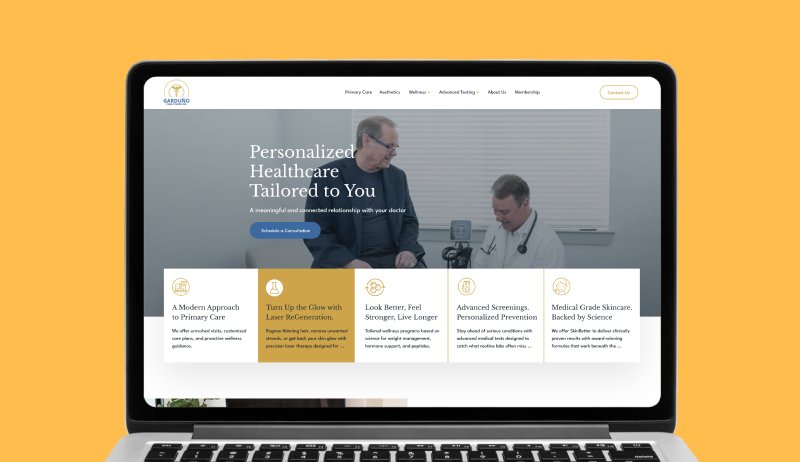
Garduno Website
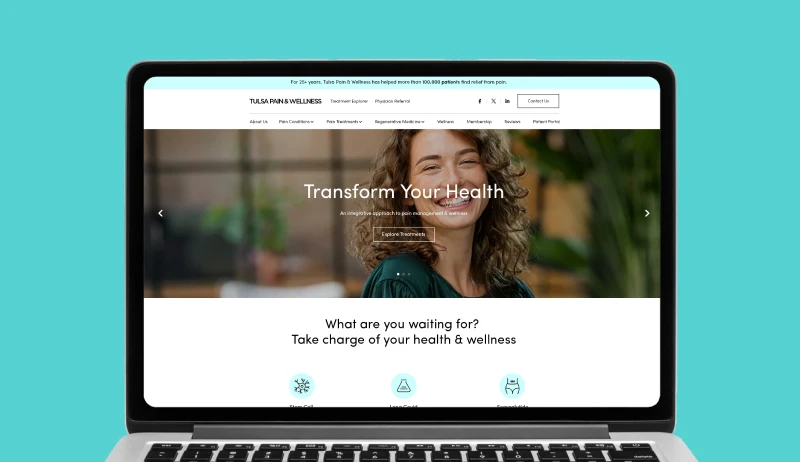
Tulsa Pain
// FAQs
SEO for Medical Professionals
What’s the difference between healthcare “design” and “development”?
Design shapes the visual experience and user journey. Development engineers the site speed, data security, backend integrations, and technical scalability that make that experience reliable, compliant, and visible to search engines.
Can you integrate online booking and patient portals?
Yes. We implement secure request forms and integrate seamlessly with your existing EMR/EHR scheduling tools and patient portals. We minimize PHI collection in web forms and utilize clear consent language with next steps.
How do you handle HIPAA/GDPR compliance and patient privacy?
Security is non-negotiable. We implement sitewide SSL, secure HTTP headers, precise consent flows, and principle-of-least-privilege user roles. Sensitive conversations are securely routed to your patient portals, strictly following your legal counsel’s guidance.
We have multiple clinic locations—will the site scale?
Absolutely. We build dynamic location templates that ensure consistent NAP (Name, Address, Phone) data and hyper-local SEO optimization. Your CMS will allow your team to add new locations, complete with maps and unique details, in minutes.
Will a website rebuild negatively affect our Google rankings?
When handled correctly by experts, a rebuild improves rankings. We meticulously preserve valuable URLs with redirect maps, strengthen your internal linking architecture, dramatically improve page speed, and add advanced medical Schema markup to increase visibility.
How soon can our new medical website launch?
Typical timelines range from 4 to 8 weeks, depending on the complexity of your integrations and content readiness. We also offer phased delivery—launching your core revenue-driving pages first, and expanding the site over time.