Healthcare Website Development
// Precision Medical Website Design:
Your Digital Front Desk
In the healthcare industry, your website is your most important patient touchpoint. Before a patient ever steps into your clinic, they evaluate your credibility based on your digital presence. We specialize in medical website design for clinics, hospitals, and dental practices that balances professional authority with high-performance functionality. Our sites are engineered to be “Patient-Centric by Design,” blending brand strategy with compliant UX to ensure visitors quickly understand your expertise, trust your credentials, and know exactly how to book their first appointment.
// Feature
What Makes Our Clinic Sites Convert

WordPress/Diviflash(Editable CMS)

Service/city pages, schema, Google Business Profile

Calendly/Bookly, WhatsApp, Stripe/Razorpay
Calendly/Bookly, WhatsApp, Stripe/Razorpay

Core Web Vitals, CDN, WebP, lazy-load

Reviews, before/after, credentials, team bios
Ready to attract more patients and grow your practice?
Search-Driven Strategy & Local SEO Dominance

A world-class medical site is useless if it’s invisible. We build “Search-Ready” architectures that help you win the “near me” searches that drive practice growth. By creating dedicated, high-intent landing pages for every specialty, condition, and treatment, we eliminate keyword cannibalization and maximize your reach. Our Medical SEO strategy focuses on:
Hyper-Local Targeting:
Optimized Google Business Profiles and location-specific pages (e.g., “Dermatologist in (City)”) to capture local patient traffic.
Medical Schema Markup:
Utilizing Physician, MedicalClinic, and FAQPage schema so search engines display your hours, reviews, and services directly in search results.
Intent-Based Content:
Mapping content to the patient journey—from symptom research to “Ready to Book” treatment queries.
High-Conversion Architecture & Patient UX

We turn passive browsers into active patients through a “Conversion-First” design philosophy. Your website will feature a clear page hierarchy that guides patients from symptoms to solutions. We integrate seamless patient-centric features including:
Frictionless Booking:
Direct integration with patient portals and scheduling tools like Zocdoc or NexHealth.
Sticky CTAs:
Persistent “Book Now,” “Call,” or “WhatsApp” buttons that remain accessible as the user scrolls.
Clinical Readability:
Typography and color contrast tuned for accessibility, ensuring older patients or those with visual impairments can easily navigate your care options.
Micro-FAQs:
Strategic FAQ sections on every service page to reduce front-desk call volume by answering common patient concerns instantly.
// Technical Excellence:
Speed, Security, and Compliance
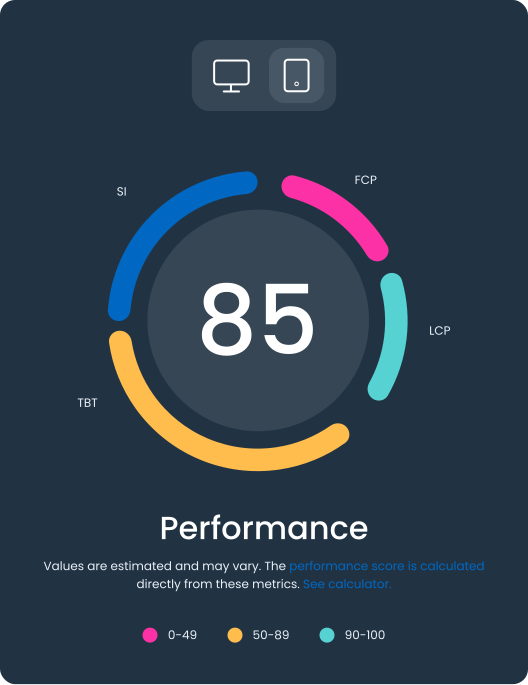
Patient trust starts with a secure and fast experience. We prioritize Core Web Vitals to ensure your site loads in under 2.5 seconds, reducing bounce rates and improving Google rankings. Beyond speed, we implement “Privacy by Design” to ensure your practice remains compliant and protected:
WCAG 2.1 AA Accessibility:
Inclusive design that meets federal standards for keyboard navigation and screen readers.
Security-First Builds:
SSL/TLS encryption, secure forms with consent language, and minimal PHI collection to protect patient privacy.
Mobile-First Performance:
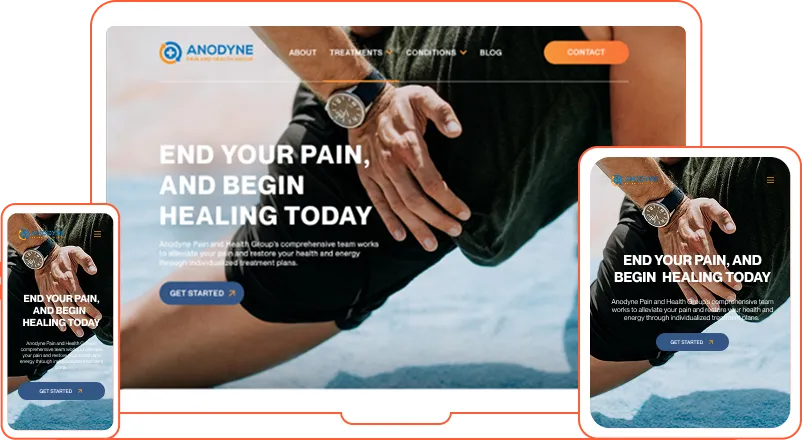
Fluid layouts that provide a premium experience across phones, tablets, and desktops, ensuring high-speed access on any network.
Specialized Solutions for Every Practice Size
Whether you are a solo practitioner or a multi-location hospital network, our scalable WordPress builds provide the flexibility you need without vendor lock-in.
For Solo Practices & Small Groups:
We focus on building rapid credibility through physician bios, board certifications, and “quick-win” content that establishes you as a local authority.
For Multi-Location Networks:
We deploy a centralized design system that allows individual departments or locations to launch unique content quickly, maintaining brand consistency while providing localized transit, parking, and provider info for every site.
Trust Signals:
We prominently feature insurance panels, hospital affiliations, and authentic patient outcomes to lower the barrier to entry for new patients.

//Data-Backed Growth
Move the Needle on Appointments
We don’t just launch and leave; we provide the transparency you need to measure your ROI. Every site we build includes custom dashboards to track appointment requests, call clicks, and WhatsApp engagement. Most practices using our medical framework see a significant increase in time-on-page and a surge in appointment requests within the first 60–90 days post-launch. Stop settling for a “brochure” website and start growing a digital asset that actively fills your waiting room.
// Featured Website
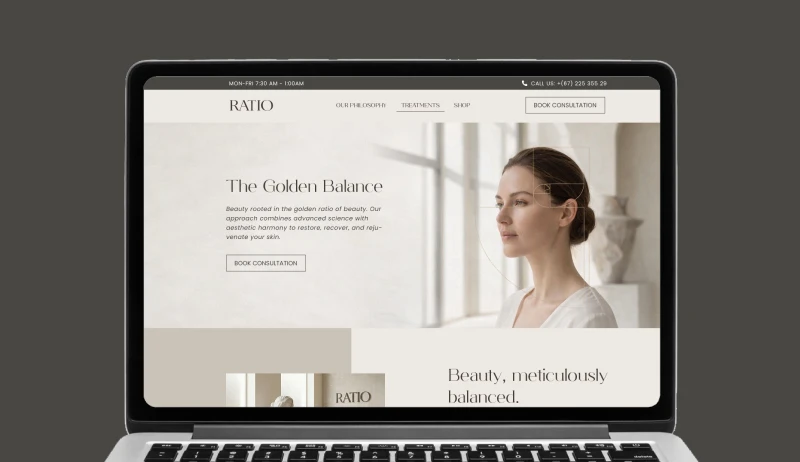
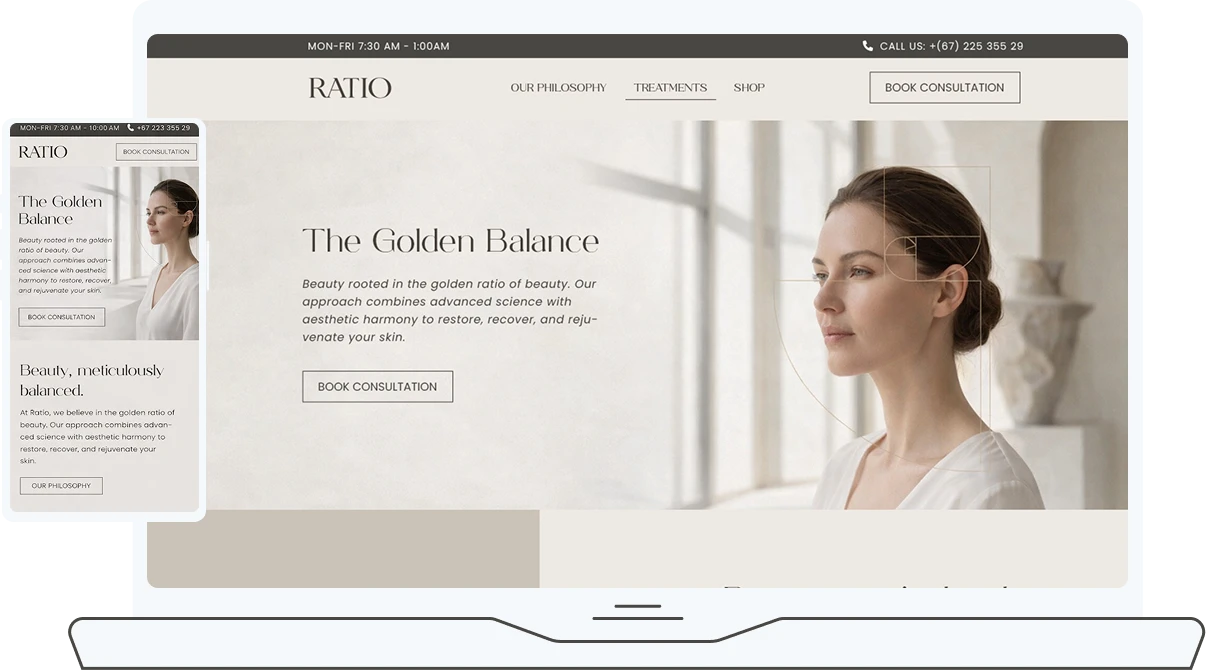
Ratio Aesthetic Dermatology
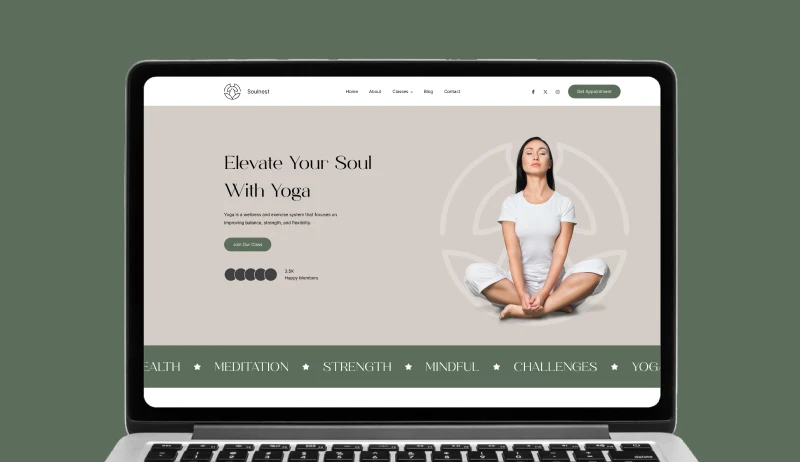
Soulnest Yoga Website
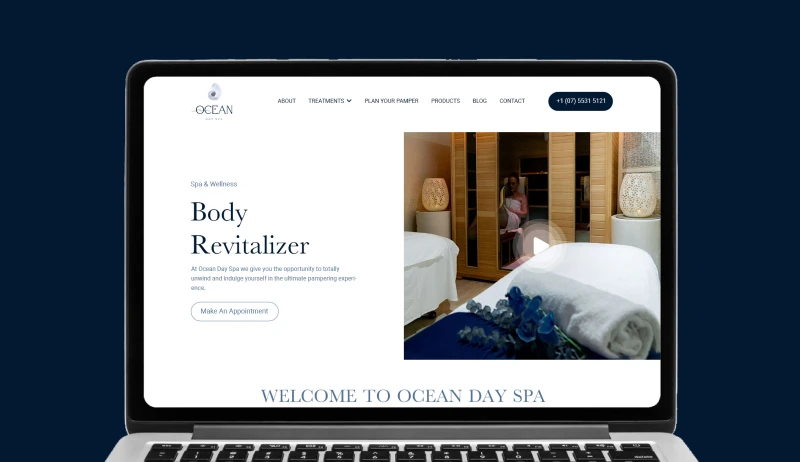
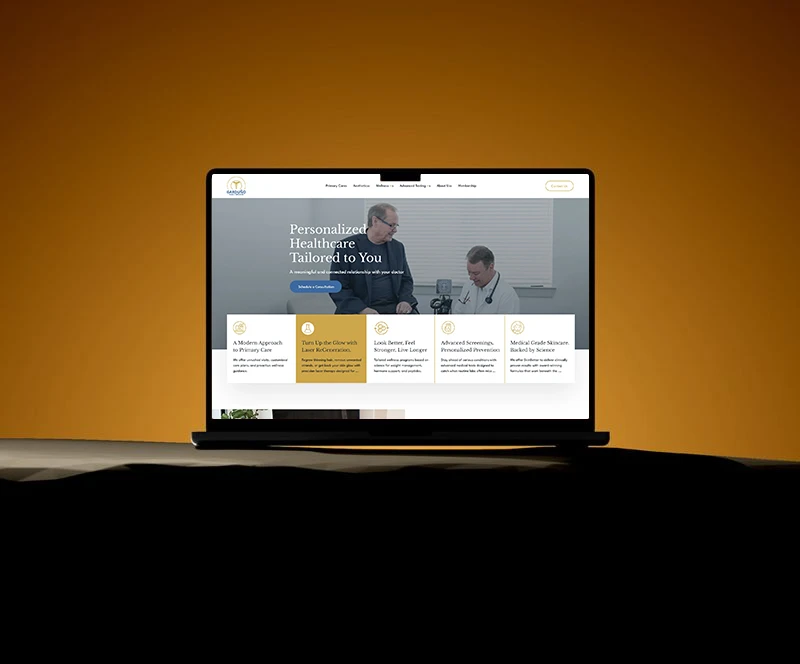
Ocean Day Med Spa