
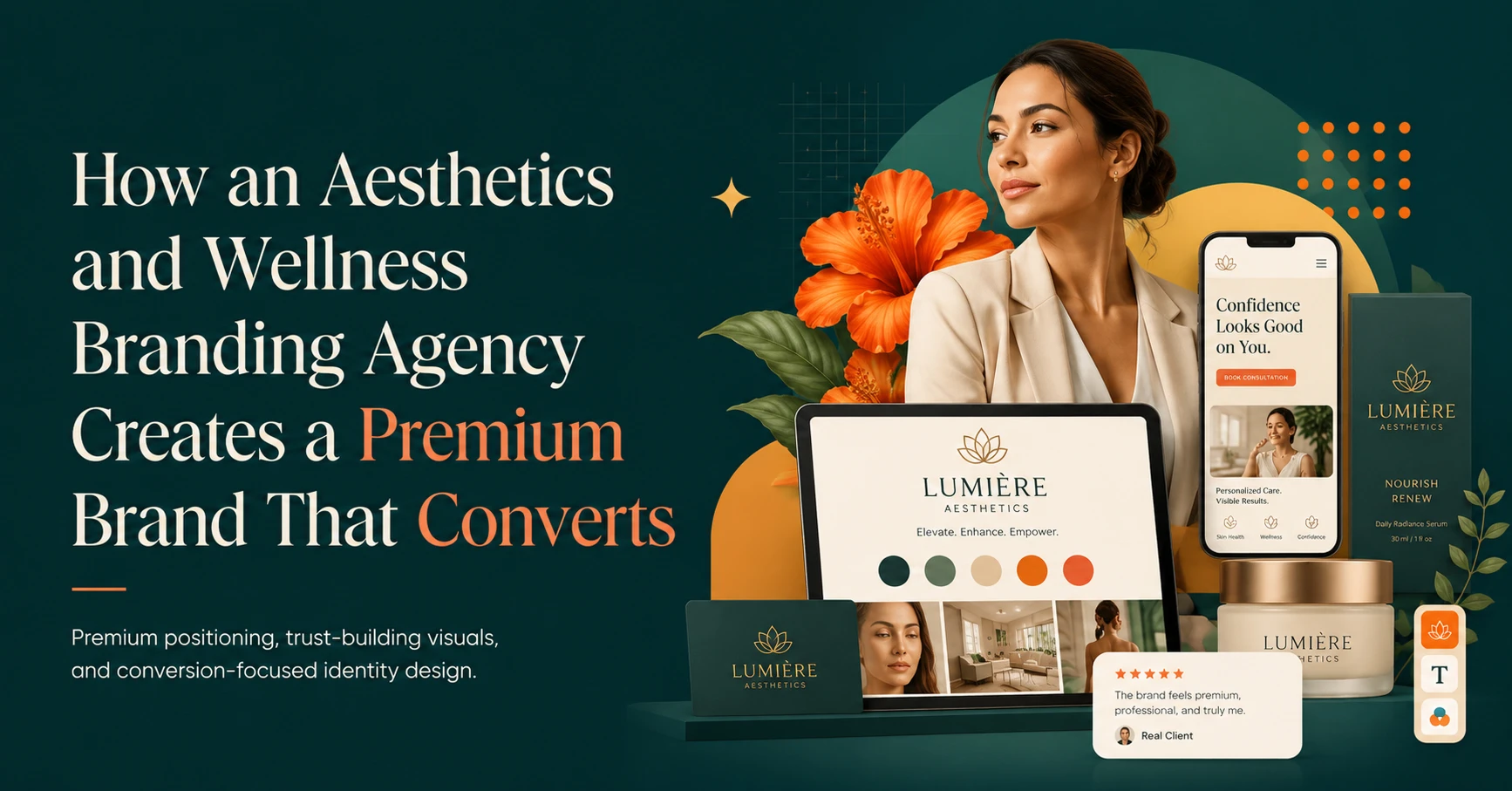
In aesthetics and wellness, people rarely choose a business based on services alone. They choose based on trust, perception, emotional connection, and the overall feeling the brand creates before they ever enquire. That is why branding is one of the most powerful growth drivers in this space. A clinic, studio, or wellness brand may offer excellent services, but if the brand feels generic, inconsistent, or forgettable, it becomes harder to stand out and harder to convert attention into real enquiries.
The strongest brands in this category do much more than look attractive. They communicate a clear experience. They make the business feel more premium, more intentional, and easier to trust. They help the right audience understand what makes the business different and why it is worth choosing. That is where a strategic aesthetics and wellness branding agency can make a meaningful difference.
Instead of focusing only on logos or surface-level visuals, a strong branding process builds the foundation behind perception, positioning, message clarity, and consistency. In this guide, we break down how an aesthetics and wellness branding agency creates a premium brand that converts, what that process should include, and why branding matters so much for long-term growth in 2026.
Table of Contents
- 1. Why branding matters so much in aesthetics and wellness
- 2. What an aesthetics and wellness branding agency actually does
- 3. Premium branding starts with clear positioning
- 4. Audience clarity makes the brand more relevant and persuasive
- 5. Visual identity shapes the first impression people remember
- 6. Messaging and tone of voice make the brand easier to trust
- 7. Premium brands stay consistent across every touchpoint
- 8. Strong branding improves websites, SEO, and conversions
- 9. Common branding mistakes aesthetics and wellness businesses make
- 10. Final thoughts and next steps
1. Why branding matters so much in aesthetics and wellness
Aesthetics and wellness businesses operate in categories where perception directly affects conversion. People are not only buying a treatment, membership, consultation, or program. They are buying into a standard of care, a feeling of trust, and an experience they want to believe in before they commit. That means branding influences far more than appearance. It influences whether the business feels credible, premium, safe, and aligned with the audience's expectations. In this market, first impressions happen fast. A person might find your business through Instagram, Google, referrals, ads, or a blog. Within seconds, they start judging whether the business looks established, whether the experience feels refined, and whether your brand seems like the right fit for them. If the branding feels inconsistent, too generic, or disconnected from the quality of the service, trust drops before the enquiry even begins. That is why branding matters so much in aesthetics and wellness. It shapes how the business is understood before a conversation happens. It gives your website more clarity, your social presence more consistency, and your offers more perceived value. A stronger brand helps people feel that your business knows exactly who it is and who it serves. When branding is weak, the business often ends up competing on convenience, price, or short-term promotions. When branding is strong, the business can compete on experience, trust, relevance, and perceived quality. That difference affects not only how many enquiries you receive, but also the type of clients you attract.2. What an aesthetics and wellness branding agency actually does
Many people think branding begins and ends with a logo. In reality, a strong branding agency does much more than create visual assets. The real work is about shaping perception and building a system the business can use across every customer touchpoint. A premium brand is not created by one pretty mark or one stylish color palette. It is created by consistency, clarity, and strategic choices that work together. A good branding agency helps define the deeper foundations of the business before design execution begins. That usually includes:- Brand positioning and market direction
- Audience clarity and client fit
- Visual identity system
- Messaging and tone of voice
- Brand personality and experience cues
- Consistency rules across website, social media, and marketing
- Strategic direction for future content and campaigns
3. Premium branding starts with clear positioning
The strongest premium brands are built on positioning before visuals. Positioning defines what kind of business you are, who you serve best, and why the right audience should choose you. Without that clarity, even beautiful branding can still feel empty. A brand may look elegant, but if it sounds like every other med spa, clinic, or wellness studio, it becomes difficult to remember and difficult to choose. Positioning is what gives the brand a commercial edge. It helps define the difference between a business that feels luxurious and one that feels generic, between one that feels specialist-led and one that feels broad, and between one that attracts aligned clients and one that attracts the wrong enquiries. Strong positioning often answers questions like:- What is this business best known for
- What type of audience is the ideal fit
- What level of experience does the brand promise
- Is the business luxurious, modern, clinical, warm, minimalist, specialist-led, or lifestyle-driven
- What makes this business meaningfully different from competitors
4. Audience clarity makes the brand more relevant and persuasive
One of the biggest reasons branding underperforms is that businesses try to appeal to everyone. In aesthetics and wellness, that often leads to vague messaging and overly broad visuals. The brand may look nice, but it does not feel especially relevant to anyone. That reduces trust and makes conversion harder. A branding agency helps refine the audience so the brand can speak more clearly to the people the business actually wants to attract. This goes beyond age and location. It includes the kind of client you want more of, the expectations they have, the level of experience they value, and the emotional cues that help them trust a business more quickly. Audience clarity shapes the brand in practical ways. It affects:- The visual mood and image direction
- The way services are described
- The tone of website and social media copy
- The structure of landing pages and campaigns
- The overall level of polish and positioning the brand needs
5. Visual identity shapes the first impression people remember
Visual identity is one of the most visible parts of branding, especially in aesthetics and wellness where perception carries so much weight. It influences whether your business feels elevated, trustworthy, calm, luxurious, clinical, approachable, or forgettable. Before anyone reads your full story, they are already forming a judgment based on what they see. A strong visual identity includes more than a logo. It usually combines:- Logo direction and usage consistency
- Typography that reflects the brand personality
- A thoughtful color palette
- Photography and image style direction
- Graphic language and supporting visual elements
- Layout rhythm that supports a premium feel
6. Messaging and tone of voice make the brand easier to trust
Good branding is not only visual. It is also verbal. Many aesthetics and wellness businesses look polished but still sound too vague. They rely on broad phrases about beauty, confidence, transformation, self-care, or feeling your best without saying enough about what makes the business distinct. That kind of language may sound nice, but it often lacks clarity. A branding agency helps build messaging that gives the business a stronger voice. That means clearer headlines, stronger brand statements, more specific service language, and a tone that matches the audience and the positioning of the business. Stronger verbal branding helps answer important questions such as:- What does this business really stand for
- What kind of experience should clients expect
- Why is this business different from similar competitors
- What should someone trust most about this brand
- What action should a visitor take next
7. Premium brands stay consistent across every touchpoint
One of the clearest signs of a premium brand is consistency. A brand should not feel polished on the website and generic everywhere else. It should not feel elevated on Instagram but disconnected inside the clinic. In aesthetics and wellness, trust grows when the same standard of presentation appears across every touchpoint. A branding agency helps create that consistency by building a brand system, not just one set of visuals. That system should guide how the brand appears across:- The website
- Instagram and social media
- Paid ad creative
- Printed materials and treatment menus
- Email communication
- Client onboarding or consultation documents
8. Strong branding improves websites, SEO, and conversions
Branding and website performance are deeply connected. A stronger brand does not just make the website look better. It makes the site easier to structure, easier to trust, and easier to convert from. When positioning is clear, the homepage becomes clearer. When messaging is stronger, service pages become more persuasive. When visual identity is consistent, the whole site feels more premium and more believable. Branding also supports SEO indirectly because it improves clarity. Well-branded businesses usually have stronger page hierarchy, better service differentiation, more focused content themes, and more consistent messaging across landing pages and blogs. That creates a cleaner foundation for growth. Strong branding improves digital performance by supporting:- Clearer homepage messaging
- Better structured service and landing pages
- Stronger trust signals and first impressions
- More coherent topic clusters for blog content
- Clearer calls to action and conversion flow
- More consistency across organic and paid traffic touchpoints
9. Common branding mistakes aesthetics and wellness businesses make
Many businesses invest in branding but still make strategic mistakes that weaken the end result. Often the issue is not a lack of effort. It is that the process starts with visuals before clarity. The business chooses pretty colors, elegant fonts, or trendy references without first defining positioning, audience, or message direction. Common branding mistakes include:- Choosing visuals before clarifying positioning
- Trying to appeal to everyone
- Using generic luxury or wellness language
- Copying competitors too closely
- Ignoring consistency across touchpoints
- Building a website before the brand is clearly defined
- Treating branding like decoration instead of strategy