
Aesthetic Clinic Website Design
// Aesthetic Clinic Website Design
Built to Earn Trust, Rank Higher & Drive Bookings
Your website is your digital front desk and sales assistant. Whether prospects discover you via Instagram, Google, or referrals, they check your site to decide: Do I trust this clinic? Is the team qualified? What’s the next step? Our aesthetic clinic website design services blends brand strategy, compliant UX, and search-driven content so visitors can quickly see your expertise, compare treatments, and book
a consultation with confidence.

Discoverability:
SEO architecture that wins “near me” searches for injectables, skin, and laser services
Trust:
credentials, memberships,.compliant before/after galleries, honest outcomes language
Conversion:
online booking, WhatsApp/call CTAs, short secure forms, clear next steps
Inclusion & compliance:
WCAG accessibility, SSL, consent language, PHI minimization
Mobile performance:
fast pages that meet Core Web Vitals and reduce drop-offs
// non-negotiables
Why aesthetic clinics need a specialized website

You deserve a website that works as hard as you do.
Friction kills bookings:
one-tap CTAs and short forms win. Long forms and hidden CTAs lose.
Patients are image-driven:
layout, photography, and galleries must be premium and responsibly presented.
Decisions are nuanced:
visitors compare options (Botox vs. fillers, peels vs. lasers). Your content should answer “Is this right for me?” in plain language.
Compliance matters:
before/after photos, testimonials, and claims need careful disclaimers and consent.
Local intent rules:
success depends on ranking for service + city queries (“lip fillers in City]”, “laser hair removal near me”).
What a conversion-ready aesthetic clinic website looks like
- Clean navigation by concern (acne scars, pigmentation, hair removal, anti-aging) and by treatment (Botox, Dermal Fillers, PRP, HydraFacial, Microneedling, Chemical Peels, Laser Resurfacing).
-
Scannable sections with H2s/H3s: What it is, Who it’s for, Benefits, Risks & Recovery, How many sessions, Cost factors, FAQs..
- One treatment/condition per page; no keyword cannibalization.
- Internal links between concerns ↔ treatments ↔ practitioner bios ↔ locations.
- Schema: MedicalOrganization/LocalBusiness, Physician, Service, FAQPage, BreadcrumbList.
- Contrast, readable type, keyboard navigation, alt text, focus states, descriptive links.
-
Captions/transcripts for video explainers and testimonials.
-
Schema: MedicalOrganization/LocalBusiness, Physician, Service, FAQPage, BreadcrumbList.
- Board certifications, memberships (e.g., dermatology, plastic surgery), sterilization protocols.
- Insurance/financing clarity for medical procedures (where applicable).
- Before/After with consent, date labels, lighting notes; disclaimers that results vary.
- Sticky Book / Call / WhatsApp on mobile.
-
Short secure forms (name, contact, treatment of interest, preferred time).
-
Confirmation page sets expectations: what happens next, prep tips, arrival guidance.
- Mobile-first performance
- Responsive images (WebP/AVIF), minimized scripts, zero layout shifts in galleries.
Patient-first UX
Search-ready structure
Accessibility (WCAG 2.1 AA)
Trust & compliance
Conversion everywhere
Mobile-first performance
Information Architecture you can copy
Home
positioning, hero proof (ratings, years, procedures), top treatments grid, CTAs
Concerns :
pigmentation, acne/scars, anti-aging/wrinkles, hair removal, uneven texture, volume loss
Treatments :
Botox, Fillers, PRP/PRF, Microneedling (with/without RF), Chemical Peels, HydraFacial, Laser Hair Removal, Laser Resurfacing, Skin Tightening, Body Contouring
Before & After :
compliant gallery with filters; consent & disclaimers
Pricing / Cost Factors :
transparent ranges or “book a consult” if policy limits publishing
Team / Practitioners :
credentials, subspecialties, languages, media features, booking links
Locations :
one page per site with NAP, map, hours, parking, accessibility, photos
Patient Resources :
prep & aftercare guides, contraindications, FAQs, financing options
Blog / Insights :
comparisons, timelines, trend explainers, seasonal skincare
Contact / Book :
tap-to-call, WhatsApp, secure request form
Add a “Find My Treatment” quiz (short, no PHI) to route visitors to relevant pages and increase conversions.

// Patient-centric
Features to include
- Consent on file, neutral backgrounds, consistent angles/lighting; timestamp or “after X weeks” labels.
- Add disclaimers (“Results vary. Images for educational purposes.”).
- Optimize images (WebP/AVIF), lazy-load, avoid layout shifts.
- One-tap CTAs: Book consult, Call, WhatsApp.
- Auto-reply after hours with response windows and prep links.
- Who it’s for / not for, timeline, pain scale, downtime, session count, maintenance, cost factors.
- Link to related concerns and alternatives (e.g., “Not a candidate for X? See Y.”).
- City pages for your top markets with unique photos and nearby landmarks.
- Google Business Profile: categories (“Medical Spa”, “Skin Care Clinic”, “Cosmetic Clinic”), services, booking URL, Q&A, weekly posts, fresh photos.
- Curate reviews (where allowed) that mention service + city.
- Showcase press mentions, influencer collaborations (disclose appropriately), and awards.
High-value page types
Booking & communication
Treatment pages that answer intent
Local SEO signals
Social proof (within policy)
// reduces calls
Content that ranks
High-value page types
Treatment pages — benefits, risks, candidacy, session plan, aftercare, FAQs
Concern pages — explain causes and options (e.g., “Pigmentation: Peels vs. Lasers”)
Comparison posts — Botox vs. Fillers, Microneedling vs. Laser, At-home vs. in-clinic
Timelines & checklists — “2-Week Botox Timeline,” “Laser Hair Removal Prep Checklist”
Editorial principles
Write in plain language; define medical terms in context.
Short paragraphs (2–4 lines), bullets, tables, and visual cues.
Cite reputable sources sparingly; avoid guarantees or absolutes.
Refresh quarterly with new FAQs and patient concerns from consultations.
Local SEO for aesthetic clinics & med spas
Google Business Profile: complete every field, add booking link, upload photos (team, rooms, equipment), answer Q&A.
Citations: consistent NAP on quality directories and local listings.
City/Neighborhood pages: unique content, embedded map, parking/transit, neighborhood landmarks.
Reviews: post-visit request (where platform rules allow). Encourage mentions of service + city.
Internal links: Home → Concerns → Treatments → Practitioners → Locations → Book.

You deserve a website that works as hard as you do.
// non-negotiables
Performance, security & accessibility

You deserve a website that works as hard as you do.
Speed:
responsive images, lazy-loading, code splitting, preconnect to CDNs, minimal JS.
Security & privacy:
SSL/TLS, secure headers, bot/spam protection, minimal PHI in forms, cookie consent (Accept/Reject/Manage) where required.
Accessibility:
color contrast, keyboard nav, aria labels, focus states, alt text, descriptive links.
Backups & updates:
scheduled, tested restores; role-based access control.
// Featured Website
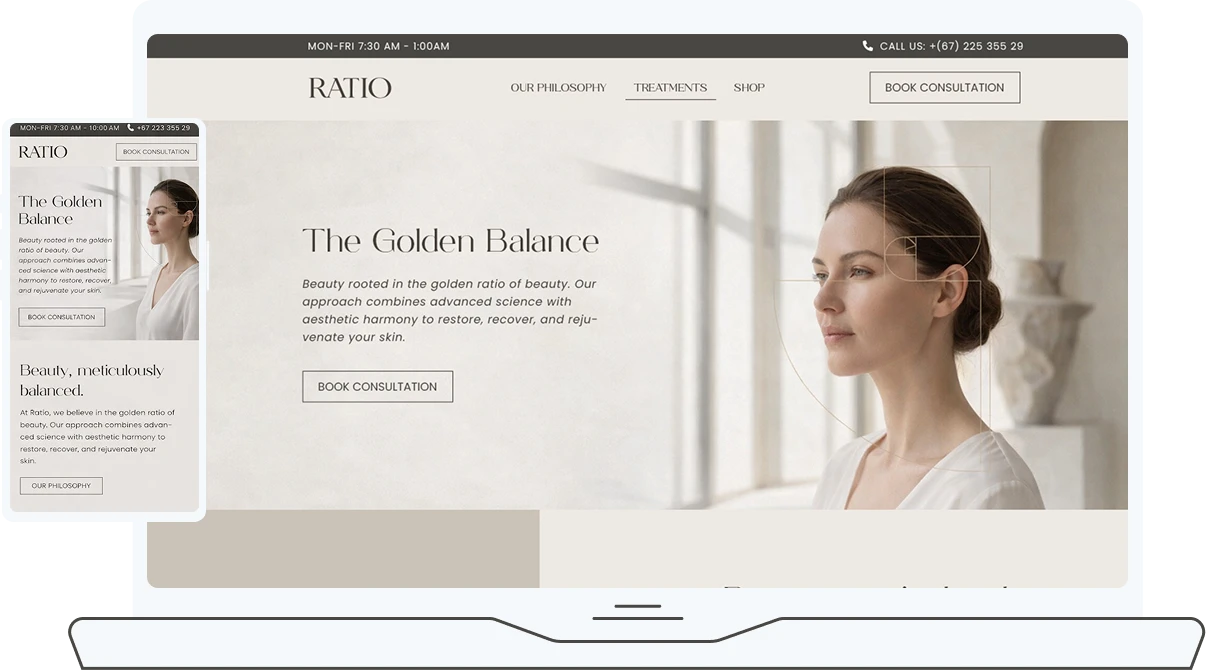
Ratio Aesthetic Dermatology
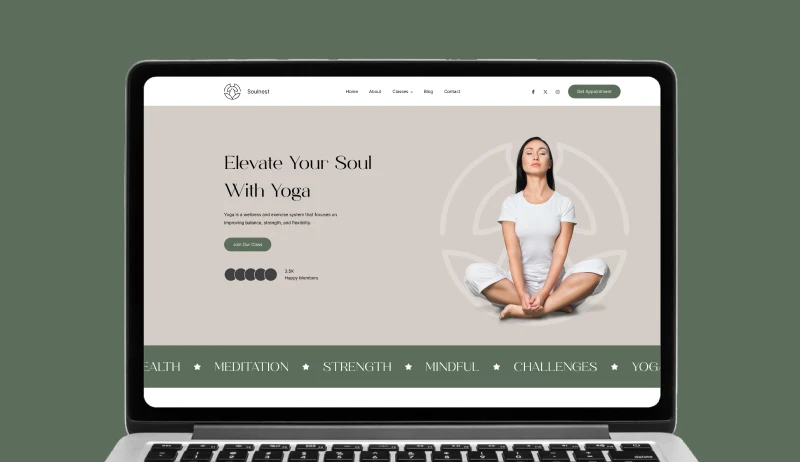
Soulnest Yoga Website
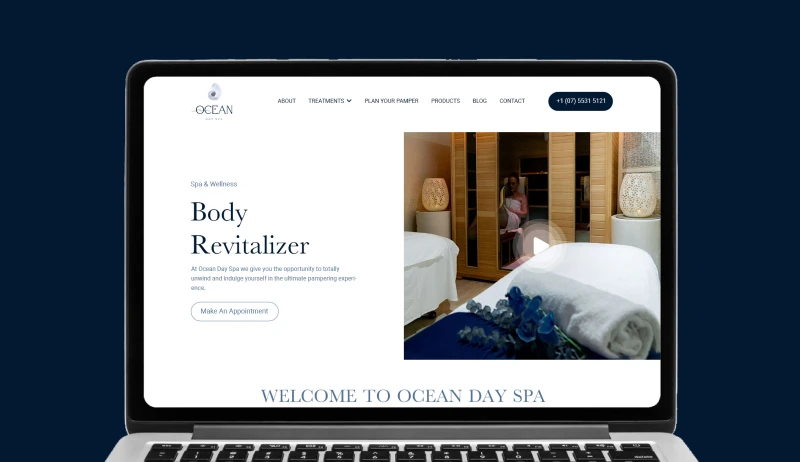
Ocean Day Med Spa
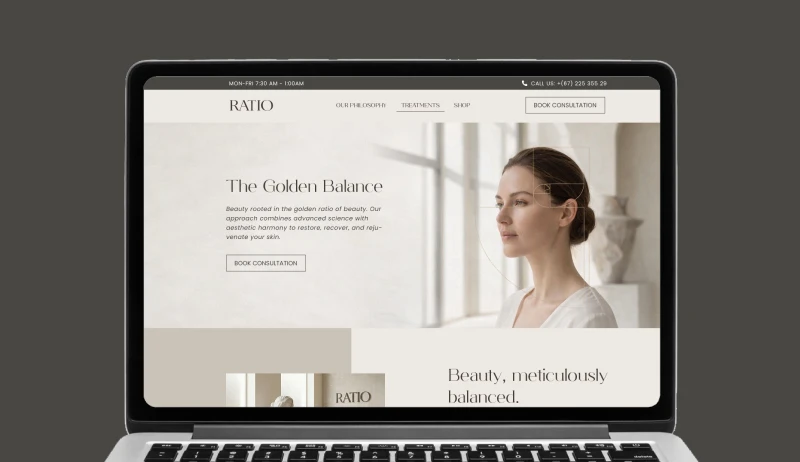
Ratio Branding and Web Design
// SEO checklist for
Aesthetic clinic websites
One topic per URL (no mixing multiple treatments on a single page)
H1 matches intent; first 100 words restate service and your location(s) if local
H2/H3s cover: candidacy, benefits, risks, downtime, session count, aftercare, cost factors, FAQs
Internal links guide journeys; avoid orphan pages

You deserve a website that works as hard as you do.
Media SEO Best Practices
Media SEO: descriptive filenames (lip-filler-before-after.webp), alt text, width/height set
Core SEO Architecture
XML sitemaps & clean canonicals; redirect map on redesigns
// non-negotiables
Performance, security & accessibility
You deserve a website that works as hard as you do.
Primary conversions:
consult requests, call clicks, WhatsApp starts, booking events
Assists:
time on treatment/concern pages, gallery engagement, scroll depth
Monthly actions:
move CTAs, shorten forms, expand top-search topics, add a city page, publish a comparison post
Roadmap:
one new treatment or concern page per month; quarterly refresh of top pages
(We implement best-practice technical patterns and follow your legal counsel’s guidance.)
// FAQs
Aesthetic Clinic Website Design in India
What makes an aesthetic clinic website different from a salon or generic spa site?
Can you integrate online booking and WhatsApp?
How do you handle before/after galleries responsibly?
ill a redesign affect our rankings?
// Work Process
Process
// Get Started Today
Book a Free Consultation
Have a project in mind? We’ll help you turn ideas into a polished, performance-driven digital experience-built to grow with your business.