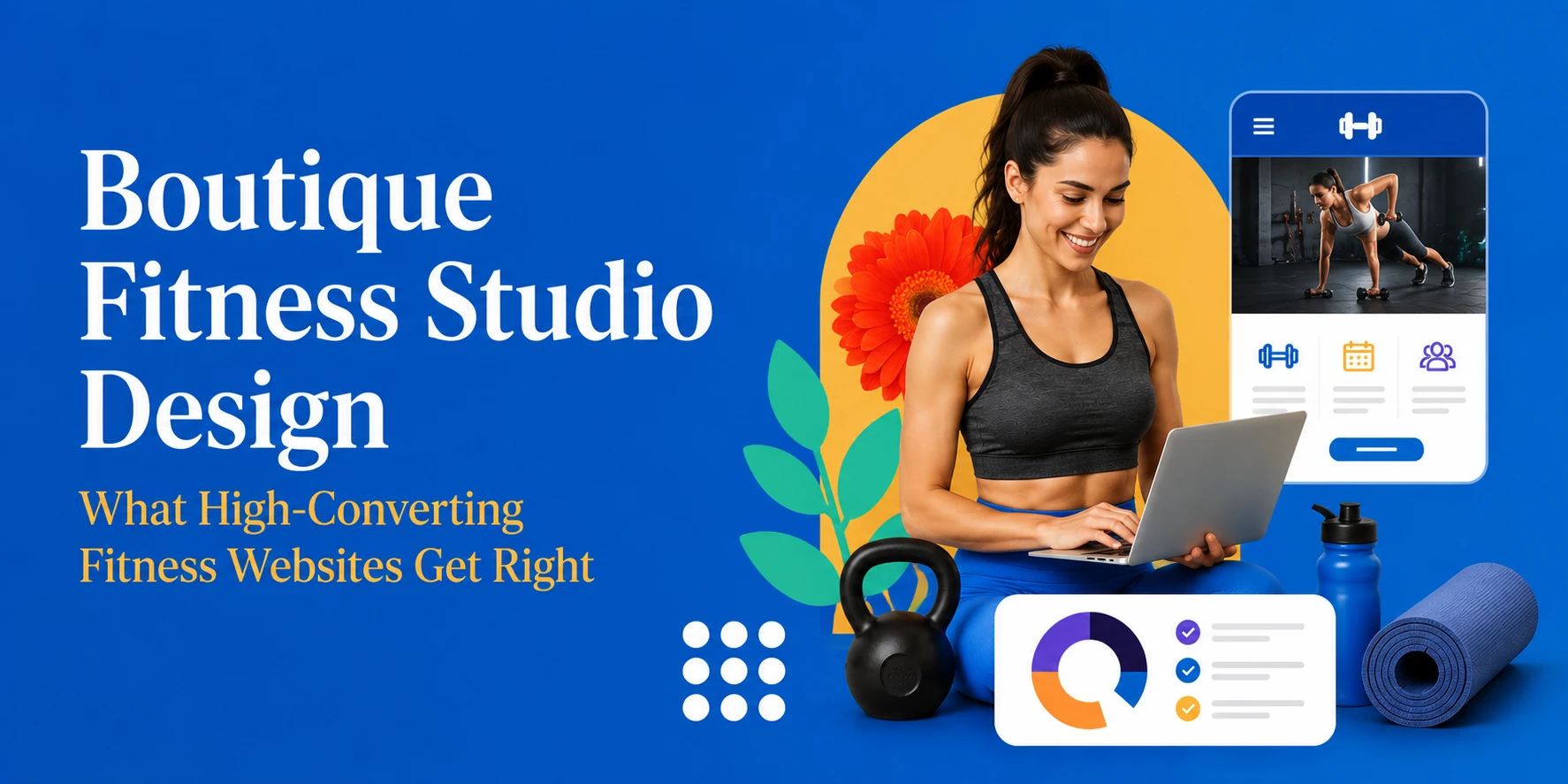
A boutique fitness website should do much more than look energetic and modern. It should communicate your studio experience clearly, reflect the strength of your brand, build trust quickly, and turn visitors into trial signups, memberships, and class enquiries. In the fitness space, people compare options fast. They look at class style, trainer credibility, atmosphere, schedules, pricing cues, and the overall feel of the brand before deciding whether to take the next step. That means your website plays a major role in whether your studio feels premium, professional, and worth joining.
The best boutique fitness websites are not just attractive. They are structured to convert. They guide a visitor from first impression to interest to action without friction. Whether your studio offers HIIT, Pilates, strength training, functional fitness, group coaching, personal training, recovery sessions, or a hybrid membership model, the website should make that value easy to understand. In this guide, we break down what high-converting boutique fitness websites get right and how stronger boutique fitness studio design can help your business attract more leads and more committed members in 2026.
Table of Contents
- 1. Why boutique fitness studio design matters more than ever
- 2. Start with a first impression that feels premium and specific
- 3. Make your offer clear instead of making visitors guess
- 4. Build trust with proof, people, and brand credibility
- 5. Create pages around your main programs and audience segments
- 6. Use mobile-first design to support modern fitness browsing behavior
- 7. Structure the site for local SEO and stronger organic discovery
- 8. Improve calls to action for trials, classes, and memberships
- 9. Use branding and content to make your studio more memorable
- 10. Final thoughts and next steps
1. Why boutique fitness studio design matters more than ever
Boutique fitness is highly brand-driven. People are not only choosing a workout. They are choosing an atmosphere, a coaching style, a community, and a lifestyle fit. That is why website design matters so much in this category. If a potential member lands on your site and cannot quickly understand what kind of studio you run, who it is for, and why it is different, you are likely to lose them to another option.
A strong boutique fitness studio design helps visitors understand your offer quickly and feel excited enough to act. It should communicate your energy, your positioning, and your value while keeping the path to enquiry or booking simple. If the website feels generic, cluttered, or confusing, the studio may look less established than it really is.
This matters even more in 2026 because fitness consumers expect a smooth digital experience. They want to browse class options easily, understand what makes your studio unique, check schedules on mobile, and take action without friction. If the site does not support that behavior, even strong studios can miss out on valuable signups.
The most effective fitness websites work as both a brand tool and a conversion tool. They create a strong first impression, support local visibility, reduce hesitation, and guide more visitors toward becoming paying members.
2. Start with a first impression that feels premium and specific
The first few seconds on your homepage set the tone for everything else. A boutique fitness brand should feel distinct, not interchangeable. Many fitness websites rely on generic stock energy, broad phrases about transformation, or cluttered hero sections that make the brand feel like every other studio. High-converting websites do the opposite. They create a clear impression of what kind of studio this is and who it serves.
Your homepage should quickly answer essential questions. Is your studio focused on small-group strength training, reformer Pilates, HIIT, functional fitness, personal training, or a hybrid concept? Is it premium, beginner-friendly, performance-led, community-led, or transformation-focused? Visitors should not need to search to figure that out.
A strong first impression usually includes:
- A clear headline that explains the studio offer
- A short supporting message that communicates the brand position
- A visible action such as book a trial or join a class
- Imagery that reflects the real energy and style of the studio
- Immediate trust cues such as testimonials, coach quality, or transformation results
Specificity is one of the most powerful conversion tools in boutique fitness. When the brand feels premium and the offer feels clear, the website becomes much more persuasive without needing overly aggressive copy.
3. Make your offer clear instead of making visitors guess
One of the biggest reasons fitness websites underperform is that they fail to explain the offer clearly. A visitor may see attractive visuals and aspirational messaging, but still not know what is actually being sold. That creates hesitation. People want to know what type of classes or training programs you offer, how the studio works, who it is best for, and what to do next.
Boutique fitness websites should explain the business model clearly. That might mean drop-in classes, memberships, coaching programs, transformations, onboarding sessions, private training, or a mix of options. The structure should make it easy for a visitor to understand how to get started.
Important offer details often include:
- Main training styles or class categories
- Who the studio is designed for
- Beginner suitability or experience level guidance
- Membership or trial options
- Schedule access
- Primary next step for a new visitor
Clarity helps conversion because it removes uncertainty. The easier your website makes it for someone to understand the offer, the easier it becomes for them to say yes to the next step.
4. Build trust with proof, people, and brand credibility
Trust is one of the biggest factors in converting a fitness visitor into a lead. People want reassurance before they book a class, buy a membership, or commit to a studio. They want to know the coaches are credible, the environment is professional, and the experience will match what the brand promises.
That is why high-converting boutique fitness websites use visible trust-building elements early and consistently. Trust should not be limited to one testimonial block hidden near the bottom. It should be woven into the website experience.
Strong proof elements often include:
- Coach or trainer profiles
- Member testimonials and review highlights
- Real photography of the studio and sessions
- Transformation stories or outcomes where appropriate
- Clear explanation of studio philosophy or training approach
- Visible location and contact information
People also trust people. A boutique studio has a huge advantage when the brand feels human rather than corporate. Showing the team, the energy, and the real member experience helps visitors imagine themselves inside the brand. That emotional connection can be a major reason someone chooses your studio over a cheaper or larger competitor.
5. Create pages around your main programs and audience segments
Another thing high-converting fitness websites get right is page structure. They do not try to explain every class, service, or audience in one long homepage. Instead, they build focused pages around important offers and user intent. This makes the site easier to understand and much stronger for SEO.
If your studio offers multiple experiences, they should not all compete for space in a single block of content. For example, you might offer:
- Group strength classes
- HIIT programs
- Personal training
- Small group coaching
- Recovery or mobility sessions
- Beginner foundations
- Women’s strength training
- Corporate fitness or private group sessions
Each of these can justify its own dedicated page if it is a meaningful part of the business. Focused pages allow you to explain the offer properly, speak to the right audience, and connect more clearly with search intent. They also create a more organized experience for visitors who may be interested in only one path.
This is similar to how strong wellness brands separate complementary services clearly. For example, businesses that also serve adjacent audiences often benefit from linking related offerings like yoga studio website design when those categories support a broader wellness or movement ecosystem without diluting the main fitness focus.
A better page structure makes the studio feel more established, more scalable, and easier to trust.
6. Use mobile-first design to support modern fitness browsing behavior
Most potential members will first visit your site on a phone. They may come from Instagram, Google search, Maps, a referral link, or a paid campaign. If the website is awkward on mobile, many of those people will leave before they ever see your schedule or trial offer. That is why mobile-first design is essential in boutique fitness.
People browsing fitness options on mobile want speed and simplicity. They may be comparing studios between tasks, on their commute, or while planning their week. They do not want to pinch, zoom, search through cluttered menus, or scroll endlessly to find basic information. A high-converting site makes the most important actions easy to reach.
Key mobile priorities include:
- Fast-loading pages and optimized media
- Readable text with comfortable spacing
- Tap-friendly menus and buttons
- Visible schedule, trial, or contact actions
- Simple forms that do not create friction
Mobile experience also affects brand perception. A premium boutique fitness brand should feel premium on a mobile device, not just on a large screen. When the mobile journey feels smooth, visitors are more likely to keep exploring and take the next step.
7. Structure the site for local SEO and stronger organic discovery
Most boutique fitness studios rely heavily on local traffic, which makes local SEO one of the most important growth opportunities on the website. People search for fitness studios near them, specific class styles in their city, beginner-friendly options, or studios that match their goals. A well-structured site helps your brand appear for those searches and makes it easier for search engines to understand your relevance.
High-converting fitness websites are usually built with SEO in mind from the start. That means each important page has a clear topic focus, strong headings, useful content, and logical internal links. The site structure should reflect how real people search rather than simply how the business talks about itself internally.
Stronger boutique fitness SEO usually includes:
- One clear search theme per main page
- Dedicated pages for important services or programs
- Location relevance where appropriate
- Clear heading hierarchy
- Internal links between related pages and blog content
- Helpful copy written around real user intent
Supporting blog content can also strengthen the landing page. Topics such as choosing the right boutique fitness studio, beginner strength training, personal training versus group classes, or how to stay consistent with workouts can bring in relevant traffic while supporting the main service pages. When done well, the blog supports the landing page instead of competing with it.
That is what creates stronger topical authority over time. Your landing page targets the commercial keyword. Your blog content expands the topic, answers related questions, and helps move people deeper into the site.
8. Improve calls to action for trials, classes, and memberships
A high-converting fitness website does not leave the next step unclear. It guides visitors toward action in a way that feels natural. This is one of the biggest differences between a website that looks good and one that performs well. People should not need to guess whether they should book a trial, fill out a form, contact the team, or check a schedule. The site should tell them.
The exact calls to action will depend on your business model, but they should be aligned with the most valuable next steps for a new visitor. Those actions should appear in multiple places across the site, especially after key content blocks that build interest.
Useful call-to-action examples include:
- Start your trial
- Book your first class
- Explore memberships
- Speak with a coach
- Request more information
The conversion path should also be low friction. If the enquiry form is too long or the booking process feels disconnected, people lose momentum. Better fitness websites reduce that friction by keeping forms simple, reinforcing trust near the action point, and clarifying what happens next after someone submits their details.
When calls to action are clear and consistent, more visitors move from browsing to commitment. That is where much of the conversion lift happens.
9. Use branding and content to make your studio more memorable
One reason boutique fitness performs differently from mass-market gyms is brand. People are often drawn to a studio because it feels specific, intentional, and emotionally appealing. That is why branding plays such a major role in website performance. A website that feels memorable is easier to trust, easier to talk about, and easier to choose.
Branding is not just about a logo or color palette. It includes the tone of voice, image style, messaging, typography, and the overall rhythm of the website. When those elements feel consistent, the studio feels more premium and more established. When they feel generic or disconnected, the business becomes forgettable.
Strong brand expression on a fitness website often includes:
- Consistent visual identity across every page
- Clear tone of voice that matches the studio culture
- Messaging that communicates the studio difference
- Photography that reflects real energy and community
- Section layouts that feel intentional and polished
If your studio feels visually inconsistent or too similar to competitors, it may not only be a website issue. It may also be a positioning and identity issue. In that case, strengthening your brand through a more strategic brand identity design approach can improve how the entire website performs by making the studio more distinctive and more credible.
Content matters too. The best fitness websites use copy that is clear, energetic, and grounded in what the audience actually cares about. Instead of vague motivational language alone, they explain how the studio helps, what kind of experience members can expect, and why the offer is worth acting on.
10. Final thoughts and next steps
The best boutique fitness studio websites combine premium branding, clear offer structure, strong trust signals, mobile-first usability, local SEO strategy, and simple conversion paths. They do not just inspire visitors. They help them understand the studio, feel confident in the experience, and take the next step without confusion. That is what high-converting fitness websites get right.
If your current website is not generating the quality of leads or membership enquiries you want, the issue may not be awareness alone. It may be unclear positioning, weak page structure, low-friction conversion paths, limited trust signals, or branding that does not feel distinctive enough. A stronger website strategy can improve all of those together and create a much stronger digital foundation for growth.
As boutique fitness becomes more competitive, studios with clearer and more strategic websites will stand out faster. A well-designed site helps your brand get found, feel more premium, and convert more visitors into real members. It becomes a powerful sales tool rather than just an online brochure.
If you are ready to improve your studio website and create a stronger digital experience that attracts more trials, more bookings, and more membership enquiries, get in touch with SMPLY Studio to discuss a fitness website strategy built for trust, visibility, and growth.