Many businesses decide to redesign their website when leads slow down, the brand starts to feel outdated, or the site no longer reflects the quality of the company. But one of the most common mistakes is jumping straight into web design before the brand foundation is clear. A new website can look cleaner, faster, and more modern, yet still underperform if the business has not defined how it should look, sound, and feel across every touchpoint. That is where brand identity design becomes essential.
Your website is one of the most visible parts of your brand, but it is not your brand itself. It is the place where your brand gets experienced. If the identity behind it is weak, inconsistent, or unclear, even a polished redesign can feel generic. The strongest websites do not begin with random layout choices. They begin with brand clarity. In this guide, we break down why brand identity design matters before a website redesign and how a stronger identity leads to better trust, stronger positioning, clearer messaging, and more effective digital growth.
Table of Contents
- 1. Why businesses often redesign too early
- 2. What brand identity design actually includes
- 3. Why a website cannot fix an unclear brand on its own
- 4. How brand identity improves trust and first impressions
- 5. Why clear branding leads to better website structure and messaging
- 6. Brand identity helps your website feel more premium and memorable
- 7. The connection between branding, SEO, and long-term growth
- 8. Common signs your business needs branding before redesign
- 9. How branding and web design should work together
- 10. Final thoughts and next steps
1. Why businesses often redesign too early
When a website starts to feel dated, many businesses assume the main problem is design. They start thinking about a new homepage, better visuals, cleaner sections, stronger animations, or a more modern layout. While those improvements can help, they do not solve the deeper issue if the business itself is not clearly positioned. A website redesign without a solid identity often turns into a cosmetic upgrade instead of a meaningful strategic improvement.
This happens because websites are highly visible. They are easy to judge and easy to blame. But sometimes the real problem is not the site structure alone. It is the lack of a strong visual system, a clear voice, a consistent message, or a distinct brand personality. If those things are weak, a redesign can still look attractive while leaving the business just as forgettable as before.
Businesses often redesign too early when:
- The logo and visual system are inconsistent
- The messaging changes from page to page
- The business is not clearly positioned in the market
- The brand feels too generic compared with competitors
- Different marketing materials all look disconnected
In those situations, redesigning the website first creates a major risk. You may build a better interface around a weak foundation. That usually leads to more revisions, more confusion, and a site that still does not feel fully aligned with the business.
2. What brand identity design actually includes
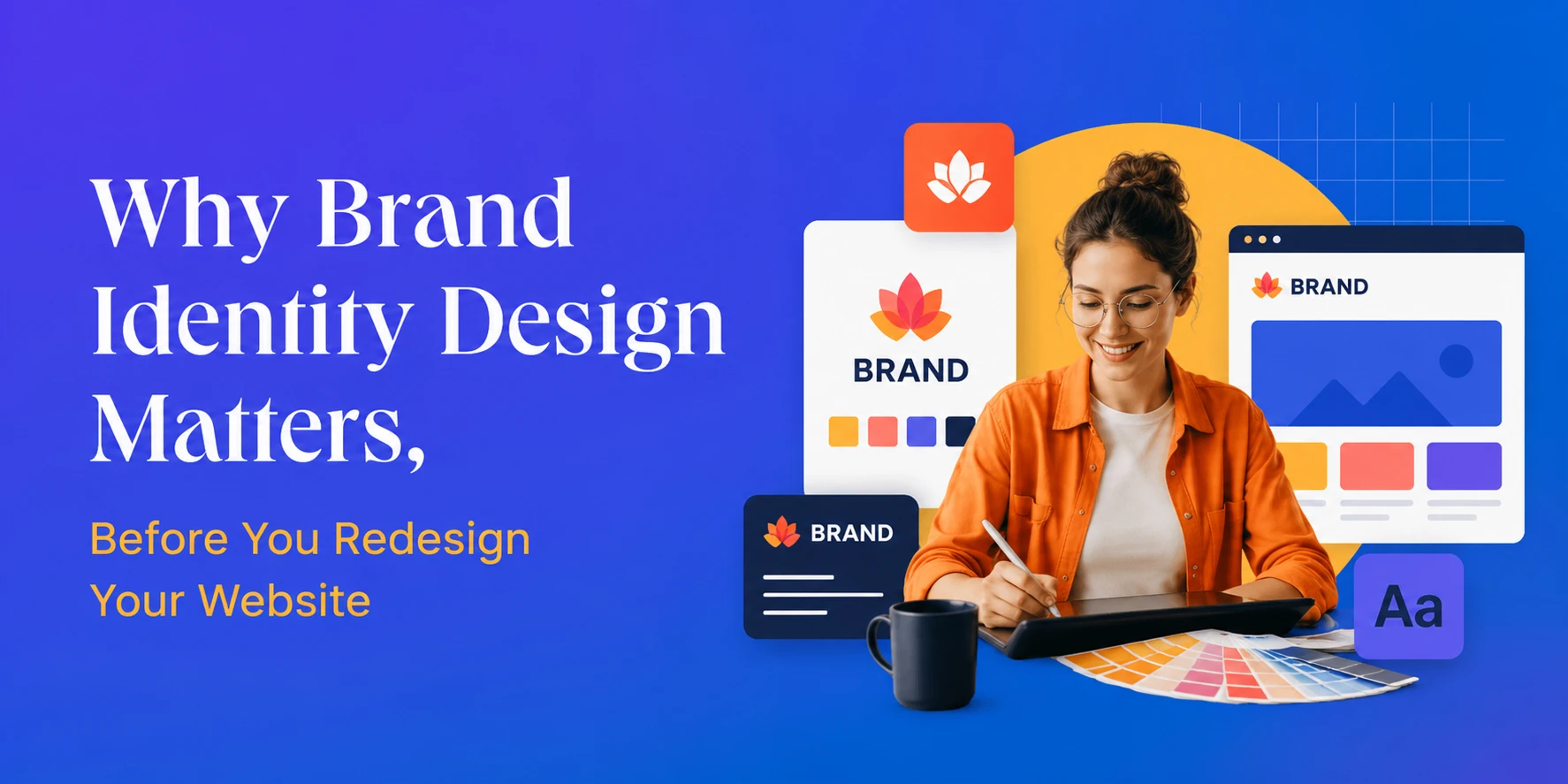
Brand identity design is much more than a logo. It is the system that shapes how your business is perceived visually and emotionally. It gives consistency to the way your company appears across the website, social media, presentations, print materials, ads, packaging, and every other customer touchpoint.
A strong brand identity design foundation often includes:
- Logo direction and usage rules
- Typography system
- Color palette
- Image style and art direction
- Graphic elements and layout language
- Brand tone and communication style
- Positioning cues and overall personality
These elements help your business feel consistent and recognizable. More importantly, they help your audience understand what kind of company you are. Are you premium, minimal, warm, clinical, bold, luxurious, approachable, expert-led, or high-energy? Identity design gives shape to that perception.
When identity design is done well, your website becomes easier to design because the visual and strategic rules already exist. Instead of guessing how the site should feel, your team can build around a clear foundation. That creates a more focused and more effective digital experience.
3. Why a website cannot fix an unclear brand on its own
A website can present a brand, but it cannot invent one. If the brand lacks clarity, the site usually ends up trying to do too much at once. It may copy popular trends, mix different design styles, or rely on generic messaging because there is no strong identity to guide decisions. This is one of the biggest reasons redesigned websites still fail to feel distinctive.
Without brand clarity, common website problems include:
- Inconsistent typography and colors
- Mixed visual tone across pages
- Weak or confusing messaging
- Unclear hierarchy and section flow
- A generic look that resembles competitors
A website built on an unclear brand often feels polished at first glance but forgettable after a few seconds. Visitors may not know what the business stands for, what makes it different, or why they should trust it over other options. That is especially damaging in competitive industries where first impressions shape conversion.
Brand identity solves this by creating alignment before the design work begins. It gives purpose to the layout, meaning to the visuals, and consistency to the message. Once that foundation is in place, the website has something real to express rather than simply something nice to show.
4. How brand identity improves trust and first impressions
Trust is one of the biggest reasons brand identity matters before redesign. People form rapid opinions online. Within seconds, they judge whether a business feels professional, established, and credible. Those judgments do not come only from the quality of the layout. They come from the overall coherence of the experience.
When the identity is strong, the website feels intentional. The typography feels chosen rather than accidental. The color palette feels deliberate. The imagery feels aligned with the message. The tone of voice sounds like it belongs to one clear brand instead of shifting from section to section. This kind of consistency builds confidence quickly.
Strong brand identity supports trust by helping your website feel:
- More consistent across every page
- More premium and professional
- More intentional in its visual choices
- More aligned with your audience expectations
- More memorable after the visit ends
That matters because trust is not just built through testimonials or credentials. It is also built through design coherence. People trust brands that look and feel like they know who they are. Identity design helps create that feeling long before the visitor reads every word on the page.
5. Why clear branding leads to better website structure and messaging
Many businesses think branding is mostly visual, but it also affects content structure and messaging. Once your identity and positioning are clear, it becomes easier to decide what your homepage should emphasize, how your service pages should sound, what your calls to action should feel like, and how the website should guide users from page to page.
For example, a premium med spa brand and a practical local service brand should not structure their websites in exactly the same way. Their audiences, expectations, tone, and decision-making triggers are different. Brand clarity helps you make better structural choices because it defines who the site is for and what impression it needs to create.
When branding is clear, it becomes easier to:
- Write stronger headlines
- Create more relevant page hierarchy
- Choose visuals that reinforce the message
- Make calls to action feel more natural
- Ensure consistency across service pages and blog content
This is why businesses that invest in brand identity first often get better websites. The design process becomes less random and more strategic. Instead of debating every section from scratch, the team can build around a clearer idea of what the business is trying to communicate.
That same clarity also strengthens how your website design works as a conversion tool. Once your brand direction is defined, it becomes much easier to build a site around a more strategic website design approach rather than relying on generic layouts or borrowed trends.
6. Brand identity helps your website feel more premium and memorable
One of the most valuable benefits of brand identity design is that it helps your website feel distinctive. In crowded industries, many websites follow similar structures, use similar imagery, and repeat similar wording. Without a strong identity, even a professionally built site can blend into the background.
Memorability comes from repetition and distinction. If your visual system is strong, your website becomes easier to recognize and easier to remember. That means the visitor is more likely to recall your brand later, especially if they are comparing several options before making a decision.
A stronger identity helps your website feel more premium because it creates:
- More cohesive visual rhythm
- Stronger typography choices
- Better use of whitespace and layout balance
- Consistent image treatment
- A clearer sense of personality and positioning
These details matter more than many businesses realize. Premium perception is often created through consistency, restraint, and confidence. Identity design gives your business those qualities. Then the website becomes a natural extension of that brand rather than a disconnected design project.
7. The connection between branding, SEO, and long-term growth
Brand identity may seem separate from SEO at first, but the two are more connected than they appear. SEO is not just about keywords and technical setup. Long-term organic growth also depends on trust, topical clarity, user engagement, and how effectively your site communicates value to the right audience.
When your brand identity is clear, your website content tends to become clearer too. Service pages are easier to structure around specific offers. Messaging becomes more focused. Supporting blog content aligns better with the same audience and positioning. All of this helps create a more coherent site architecture, which is good for users and search engines alike.
Stronger branding can indirectly improve growth by supporting:
- Clearer page hierarchy
- More focused messaging
- Better engagement and lower confusion
- Higher perceived credibility
- Stronger content consistency across the site
For businesses publishing blogs, landing pages, and service clusters, this matters a great deal. If the brand direction is weak, content tends to drift. If the brand direction is strong, everything on the site reinforces the same perception. That consistency helps users trust the brand more and makes your digital presence feel more established over time.
8. Common signs your business needs branding before redesign
Not every website project needs a complete rebrand first, but many do. The challenge is that businesses often assume their problem is design when there are deeper symptoms pointing to identity issues. Recognizing those signs early can save time and prevent an expensive redesign that still misses the mark.
You likely need branding work before redesign if:
- Your logo, colors, and typography feel outdated or inconsistent
- Your website, social media, and documents all look unrelated
- Your messaging changes depending on the page or platform
- You struggle to explain what makes your business different
- Your brand does not match the quality of your service
- Your website feels generic even after visual updates
- You want to reposition the business more premium or more niche
These are all signs that redesign alone may not be enough. If the business is evolving, targeting a new audience, moving upmarket, or trying to compete more seriously, identity design becomes even more important. It helps make sure the website reflects the business you are becoming, not just the site you had before.
9. How branding and web design should work together
The strongest digital results happen when branding and web design are treated as connected parts of the same strategy. Branding should not live in one silo while the website is designed in another. The identity should actively inform the structure, visuals, content flow, and conversion experience of the site.
A healthy process often works like this:
- Clarify positioning and audience first
- Define visual identity and communication style
- Translate that system into website wireframes and page hierarchy
- Apply the brand across layouts, content, and mobile behavior
- Ensure the final site still feels consistent across every page
When branding and web design work together, the website feels stronger because it is not guessing. Every section supports the same impression. Every page belongs to the same system. The result is usually better user experience, better trust, and a site that feels more scalable as the business grows.
This is especially important if the website will later expand into service clusters, landing pages, or SEO-led content. A consistent identity helps all of those future pages feel connected. It also makes the brand easier to maintain across future campaigns, social media, and marketing assets.
If you skip identity and jump straight into layout decisions, the opposite usually happens. The site may still launch, but it often needs rework later when the brand finally becomes clearer. Doing branding first is often the simpler and more cost-effective path.
10. Final thoughts and next steps
Brand identity design matters before a website redesign because the website is not the foundation of the brand. It is the expression of the brand. If that foundation is unclear, inconsistent, or too generic, the redesign will have limited power no matter how polished the final pages look. A better visual system, clearer positioning, and stronger brand coherence give the website something meaningful to communicate.
When the identity is strong first, the redesign becomes more strategic. The visuals feel more intentional, the messaging becomes clearer, the structure works better, and the overall experience feels more premium and trustworthy. That leads to a website that not only looks better, but performs better.
If your business is planning a redesign, it is worth asking whether the current challenge is really the site itself or the brand underneath it. In many cases, the best website results come after the brand has been clarified. That sequence creates a stronger digital foundation and supports more consistent long-term growth.
If you are ready to strengthen your brand before redesigning your website, get in touch with SMPLY Studio to discuss a brand-first strategy built for clarity, trust, and long-term digital growth.